What This Season Taught Our Gardens
Designing gardens for wetter winters, hotter summers and changing conditions across Kent & East Sussex.
Gardens across Kent and the South East have been asked to cope with a remarkable range of conditions this year.
A particularly wet winter left many lawns and borders saturated, while spring brought record warmth across England and Wales. That was followed by exceptional summer heat and prolonged dry conditions across southern England. The contrast has been difficult for lawns, planting, clay soils and hard landscaping alike.
For homeowners, these changing conditions have appeared in familiar ways: waterlogged lawns, compacted ground, cracked clay, stressed planting, fading grass and paving that no longer drains as effectively as it should.
One unusual season does not provide all the answers. However, it does reinforce an important principle: gardens should be designed for more than ideal weather.
A thoughtful garden needs to manage rain, withstand dry spells and remain practical throughout the year. That resilience rarely comes from one feature alone. It comes from considering the soil, drainage, levels, planting and construction as parts of the same landscape.
Healthy soil is part of the garden’s infrastructure
Soil is easy to overlook because much of it disappears beneath lawns, borders and planting. In reality, it is one of the most important parts of any garden.
Healthy, well-prepared soil supports root development, stores moisture and helps plants recover after difficult weather. Compacted soil behaves very differently. During wet periods, water may remain on the surface because it cannot move through the ground effectively. During dry weather, roots can struggle to reach the moisture they need.
This is particularly relevant in Tunbridge Wells, Sevenoaks, Tonbridge and the surrounding areas, where clay soil is common.
Clay can retain moisture and nutrients well, but it can also drain slowly, become easily compacted when wet and shrink or crack during prolonged dry spells. Improving clay soil with organic matter, protecting it from unnecessary traffic and keeping planted areas mulched can help it perform more consistently throughout the seasons.
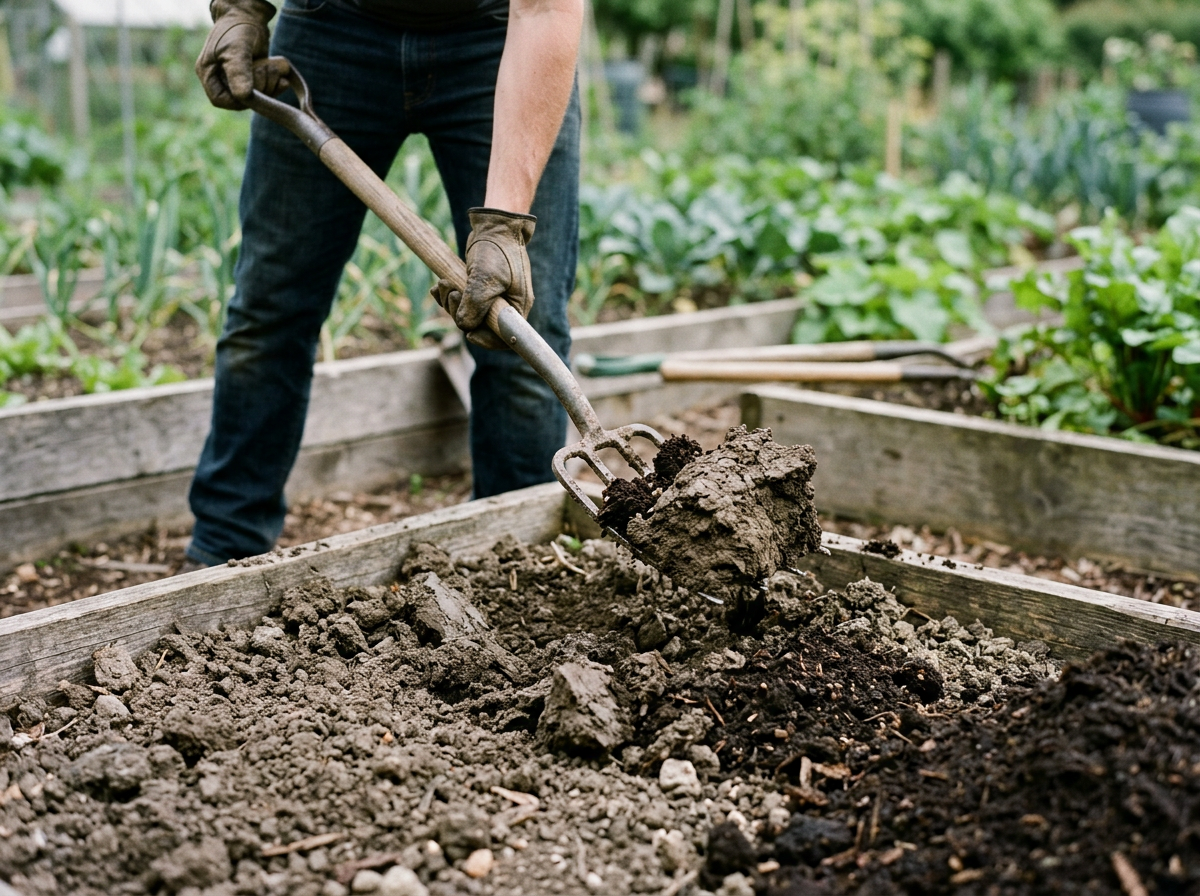
Good planting therefore begins well before the plants arrive. Soil preparation may not be the most visible part of a landscaping project, but it has a lasting effect on how the finished garden establishes and matures.
Drainage and levels should be considered before the finish Result
After a wet winter, the obvious response to standing water is often to install more drainage.
Sometimes that is the correct solution. However, before any work begins, it is important to understand where the water is coming from, where it naturally wants to travel and whether compaction, unsuitable levels or damaged drainage are contributing to the problem.
A garden can include beautiful paving and planting but remain frustrating to use if water collects beside the house, across a pathway or in the lowest part of the lawn.
That is why the less visible decisions often matter most:
establishing appropriate levels and falls;
preparing suitable foundations and sub-bases;
maintaining enough permeable ground;
directing excess water towards a suitable destination;
and avoiding unnecessary areas of completely sealed paving.
Not every wet garden requires a complex drainage system. In some cases, reducing compaction and improving the soil may be enough. More persistent problems may require land drains, soakaways, changes to levels or another carefully designed drainage solution.
The aim should not simply be to move rainwater elsewhere as quickly as possible. A well-designed garden allows water to soak into the ground where appropriate, while safely managing genuine excess.
Planting must suit the garden—not simply the trend
Planting schemes have always needed to consider sunlight, exposure, soil and the character of the property.
Increasingly, they should also consider how plants will respond when conditions change quickly from wet to dry.
A plant described as drought tolerant may still struggle in heavy, saturated soil during winter. Equally, a plant suited to moisture-retentive ground may suffer during an extended summer dry spell.
This is why the principle of right plant, right place remains so important.
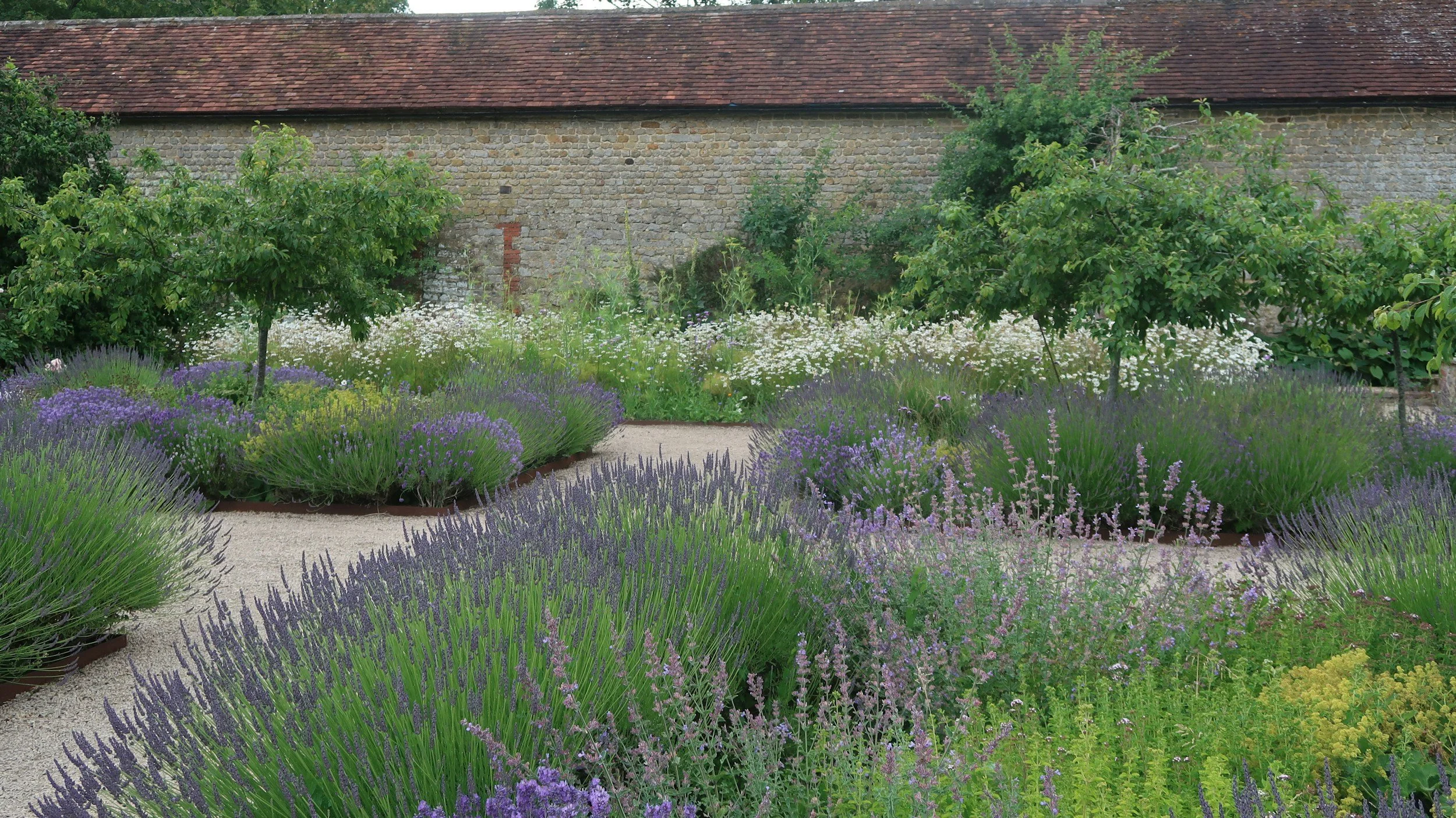
A varied planting scheme can help create a more stable garden. Trees and larger shrubs provide shade and shelter. Perennials and ground-cover planting help protect the soil. Different root depths allow plants to use water and nutrients from different layers of the ground.
Mulching planted areas can also reduce moisture loss during dry periods while helping to improve the soil over time.
Resilient planting does not mean every garden must look the same. Cottage gardens, formal schemes and more contemporary spaces can all be planned with changing conditions in mind. The objective is to combine suitable plants in a way that still reflects the home, the setting and the people who use the garden.
A brown lawn is not always a failed lawn
One of the most visible effects of dry weather is a lawn changing from green to straw-coloured.
Although this can look concerning, an established lawn is often more resilient than it appears. During periods of heat and drought, grass may become dormant and stop producing green growth. In many cases, the roots remain alive and the lawn begins to recover once cooler temperatures and reliable rainfall return.
During dry weather, mowing less frequently and leaving the grass slightly longer can reduce stress. Once conditions improve, the lawn can be assessed properly.
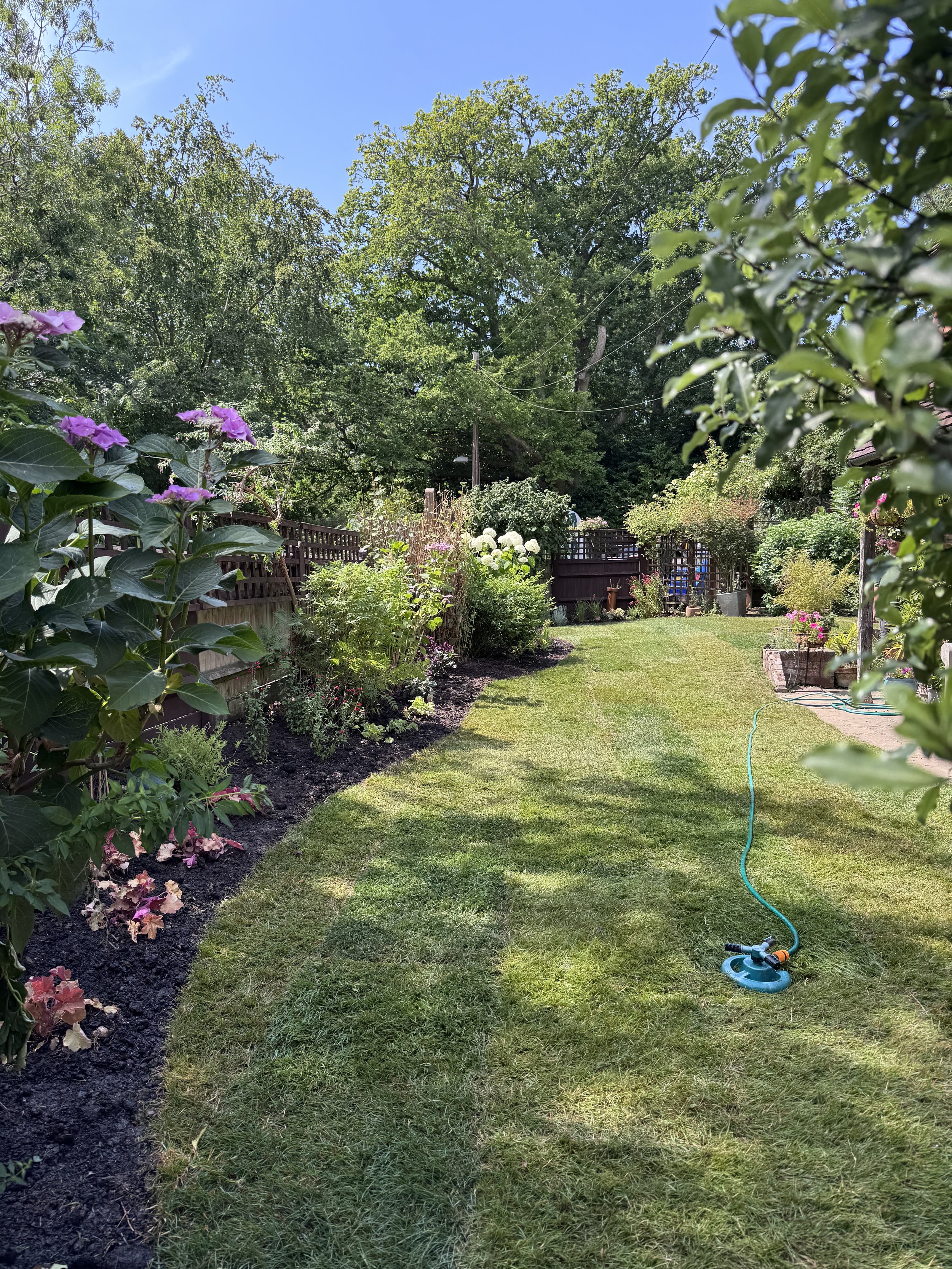
Some areas may recover naturally. Thin, compacted or genuinely damaged sections may benefit from aeration, topdressing and reseeding during the appropriate season.
The important point is to identify the underlying cause. A temporarily dormant lawn is different from one suffering because of compaction, poor preparation or inadequate drainage.
Good construction must account for water and ground movement
Changing weather affects more than lawns and planting.
Paving, steps, walls, fencing and other garden structures depend on preparation that is largely hidden once the project is finished.
Extended wet periods can expose weak foundations, inadequate drainage and failing joints. In areas with clay soil, prolonged drying and rewetting can contribute to movement in the ground.
This makes appropriate excavation, foundations, compaction, drainage, falls and jointing essential.
Material selection also affects how a garden performs. Permeable paving, gravel and planted areas allow more rainwater to enter the ground than fully sealed surfaces. Keeping a considered balance between hard and soft landscaping can help reduce surface water run-off while also making the garden feel cooler and less visually hard during warm weather.
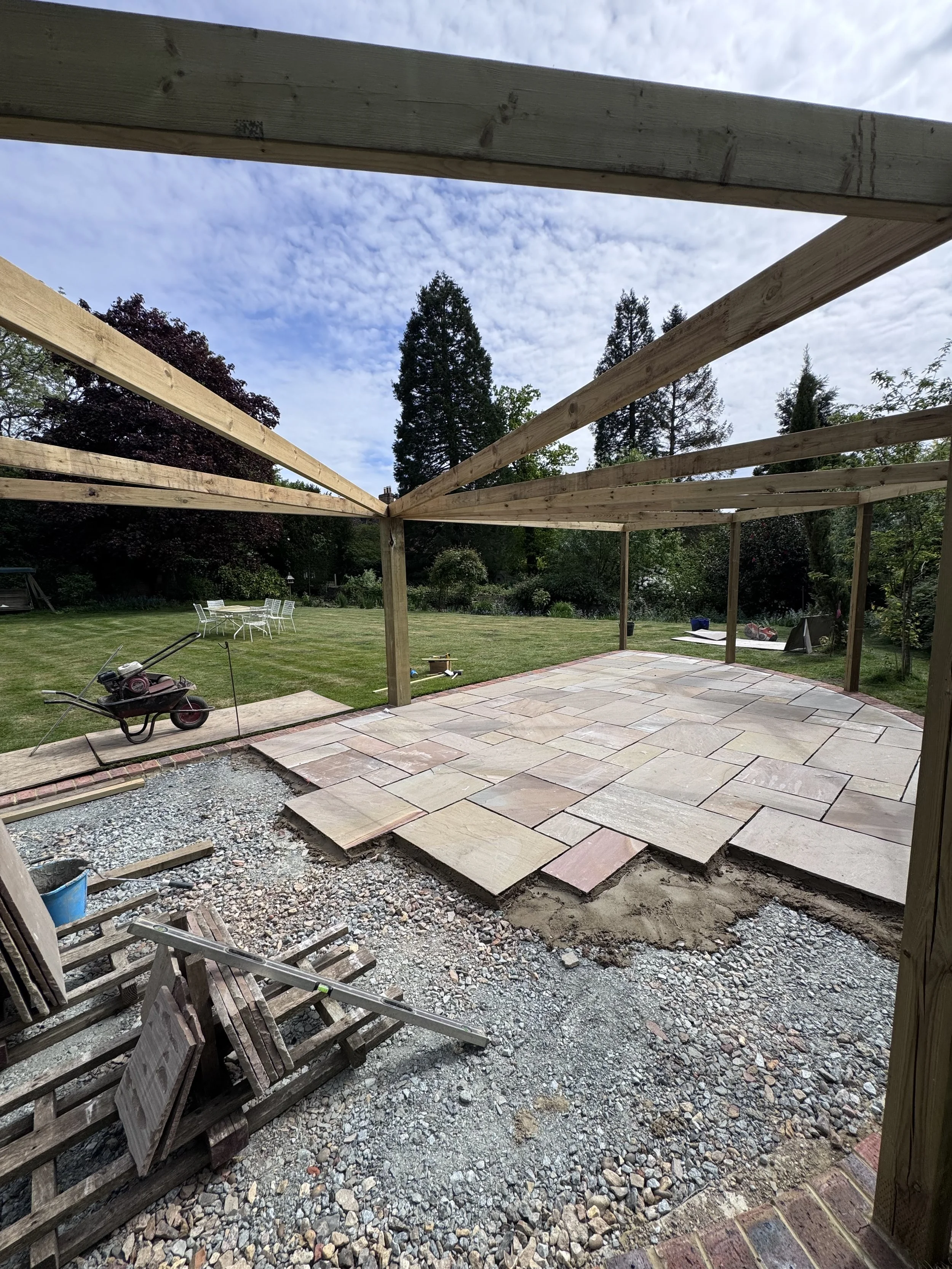
Good craftsmanship is therefore about more than achieving a clean finish. It is about understanding what that finish requires beneath it so the garden remains attractive, safe and practical through repeated seasons.
What homeowners can do this autumn and winter
The cooler months provide a valuable opportunity to review how your garden has performed.
Look for areas where water consistently gathers, paths that become slippery, lawns that remain soft long after rain and paving that has begun to move or lose its pointing.
You can also consider:
aerating and repairing compacted lawns;
adding organic matter to planting areas;
mulching around established trees and shrubs;
clearing blocked drains and channels;
repairing loose paving, steps and damaged joints;
planting suitable trees, shrubs and perennials;
reviewing whether hard surfaces are directing water towards vulnerable areas;
and planning structural landscaping before the next growing season.
Not every garden requires a complete redesign. Often, a series of carefully chosen improvements can make an existing garden more resilient and enjoyable.
Thoughtful gardens for changing seasons
At Greenacre Landscapes, creating a resilient garden does not mean imposing the same solution on every property.
It begins by understanding the garden as it already exists: its soil, levels, drainage, planting, architecture and the way the clients want to use it.
For one garden, that may involve improving drainage and levels before repairing the lawn. For another, it may mean choosing planting suited to clay soil, creating shade or retaining enough permeable ground around a new patio.
In some cases, the most responsible approach is not to replace everything, but to repair, restore and adapt what is already there.
Our work across Tunbridge Wells, Sevenoaks, Tonbridge and the surrounding areas brings together landscape construction, planting, lawn care, maintenance and restoration. The strongest gardens are created when these elements are considered together rather than treated as separate jobs.
This season has been a useful reminder that gardens should be built for more than the handful of perfect days we imagine when planning them.
They should be able to absorb rain, recover from heat, mature with confidence and remain enjoyable throughout the changing seasons.
Is your garden struggling with drainage, clay soil, an uneven lawn or changing weather conditions? Get in touch with Greenacre Landscapes to discuss practical improvements designed around your garden and the way you use it.